 Research Papers on Chemical Ecology of Insects
John A. Byers and Coauthors
Host Plant Selection:
1. Avoidance of nonhost tree and plant volatiles by pine bark beetles
2. Avoidance of host and nonhost tree volatiles by pine bark beetles

3. Birch volatiles inhibit spruce bark beetles
4. Attraction to ethanol and monoterpenes
5. Host- and mate-recognition
6. Olfactory recognition of host-tree susceptibility
7. Host unsuitability recognized in flight
8. Attraction of elm bark beetle to elm
9. Attraction of tea aphid to tea
Pheromone Biosynthesis:
1. Pheromone precursor in 5 Pine species
2. Myrcene from host tree as pheromone precursor
3. Symbiotic microorganisms and pheromone biosynthesis?

4. Sex, maturity, and host-tree effects on biosynthesis
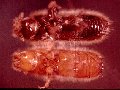
5. Ips paraconfusus pheromone biosynthesis
6. Male-specific biosynthesis of inhibitor
Alarm and Defensive Chemicals:
1. Cost of aphid alarm pheromone production
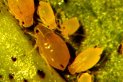
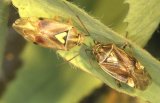
2. Defensive chemicals of plant bug Lygus hesperus

3. Individual variation of alarm and defensive semiochemicals
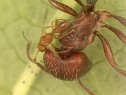
Competition:
1. Mutual avoidance of competition
2. Review: Avoiding competition in bark beetles
3. Female bark beetle avoids trans-verbenol and competition

4. Regulation of competition in Ips paraconfusus by pheromone
5. Interspecific inhibition and competition

6. Reproductive isolation by olfaction

7. Lygus plant bug sex pheromones
Mating and Colonization Ecology:
1. Mate-finding behavior of pine shoot beetles
2. Pheromones regulating competition and host colonization
3. Effect of mating on pheromone
4. Antiaphrodisiac in
male Lygus bugs
Isolation of Semiochemicals:
1. Isolation of P. chalcographus aggregation pheromone

2. Isolation of Ips duplicatus aggregation pheromone
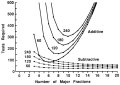
3. Subtractive - Combination method
4. Heater Coils for Transfer Lines
5. Canada Thistle
volatiles

Dispersal and Host-Finding Models:
1. Searching for susceptible host trees
2. Dispersal out through rings of pheromone traps

3. Insect population control by pheromone traps
4. Effective Attraction Radius: EAR

Orientation Behavior:
1. Odor-modulated anemotaxis and clumped arrival
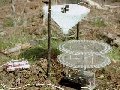
2. Orientation of bark beetles in a grid of pheromone traps

3. Rotating windvane traps and upwind orientation
4. Interacting plumes

5. Interspecific effects on attraction

6. Behavioral differences when flying or walking

Host Plant Chemistry and Semiochemicals:
1. Host tree chemistry affecting bark beetles

2. Chemical Ecology of Bark Beetles
3. Plant galls and growth hormones induced by insects
4. Monoterpene diversity of ponderoda pine
5. Isoprenoid products of guayule rubber plants

6. Lesquerella Oil-Seed Crops

Evolution and Chemical Structures:
1. Chalcogran and Methyl 2,4-Decadienoate
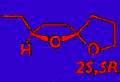
2. Constraints on Moth Pheromone Isomers
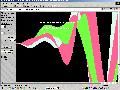
3. Evolution of Communication Channels

4. Evolution of Host Selection and Insecticide Resistance
Release of Semiochemicals:
1. Diffusion - Dilution method
2. Piezoelectric Sprayer

Models in Chemical Ecology:
1. Mating Disruption
and Mass Trapping
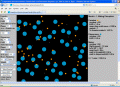
2. Active Space versus EAR
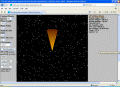
3. Flight layer
and EAR in 3D
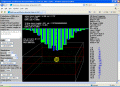
4. Vertical Flight
Distribution
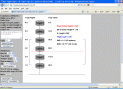
5. Estimating Densities
of Flying Insects

6. Female or Male
Mass Trapping

7. Dose-response curves
antennae / catch

8. Pink bollworm and invasive species

Locust Semiochemicals:
1. Pheromones and chemical ecology of locusts
Trends in Chemical Ecology :
1. Computer analysis of trends in Chemical Ecology
2. Internet programs for drawing moth pheromone analogs
Images © 1996 by John A. Byers.
Research supported by grants from Sweden's SJFR (Skogs- och Jordbrukets Forskningsråd = Forest and Agricultural Research Council).